The Big Ditch – Spring 2026
Time for Spring Cleaning!
By Avi Webb, Local History Librarian
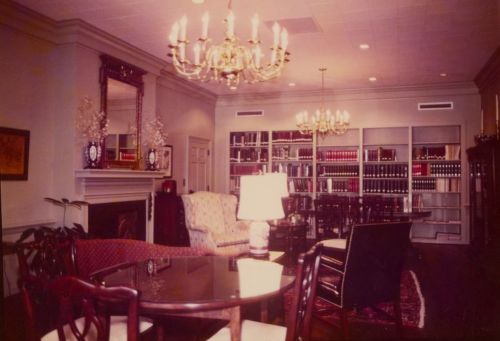
Spring is here and it’s time for traditional spring cleaning! In the spirit of the season, the Local History Room is getting a facelift. We have new desks, a TV for programs, and a reorganized cabinet of resources! Next time you stop by the library, ask us for a tour of the new layout! We hope you join us in this time of new beginnings!
Spring is here and it’s time for traditional spring cleaning! In the spirit of the season, the Local History Room is getting a facelift. We have new desks, a TV for programs, and a reorganized cabinet of resources! Next time you stop by the library, ask us for a tour of the new layout! We hope you join us in this time of new beginnings!
Goldsboro Garden Club
By Justin Pickett, Reference Librarian
 As we jump into the spring season, I wanted to recognize a pinnacle of the Wayne County community. What was once called the Waynesborough Garden Club (now Goldsboro Garden Club) became organized and federated in 1959. The club served as a member of the National Council of State Garden Clubs, Inc. Waynesborough was part of District XI, which was also known as the South Atlantic Region.
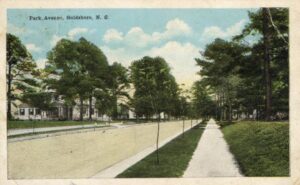
 Over 100 years after its start in 1923, the Goldsboro Garden Club helped define what Goldsboro is today! Their work impacts areas around our community like Herman Park, Cliffs of the Neuse, and Downtown Goldsboro. The organization was a prominent contributor to the current aesthetics of Wayne County! The trees you see today on Center Street were planted by the garden club in 1980.
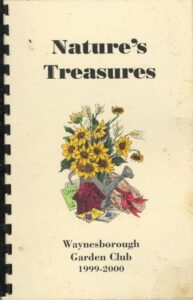
The Nature’s Treasures book offers us highlights of club activities. It features a year’s worth of events such as instructional pruning sessions and guided garden tours. It’s packed with helpful gardening tips and knowledge.
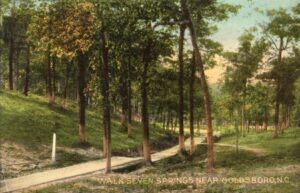 Check out some other materials like postcards, newspaper clippings, and club flyers found in our Garden Club Collection! The collection gives us a glimpse of the club’s history. In 1972, the Garden Club and the Chamber of Commerce had a “Special Sale” of dogwood trees. This was a very successful effort as over 2,000 orders of pink and white dogwoods were made by Goldsboro residents.
If you are looking to plant some trees, this Goldsboro News Argus article with step-by-step instructions from 1972, might be helpful! The instructions included keeping the roots moist and reducing heat exposure. It’s best to immediately plant the tree in a well-drained location so the water does not stand around the roots. Leave at least 15 feet between trees and keep them mounded. Work loose topsoil around the roots and be careful when filling air any pockets. Mulch with three inches of bark, straw, or leaves. Water every two or three days and check at weekly intervals through the first growing season before watering. Wait until leaves appear in the spring to fertilize them and use a small amount for the best possible results!
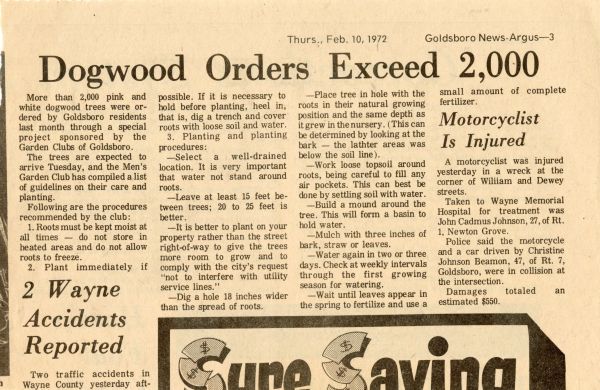
(Image transcribed:
Thurs., Feb. 10, 1972 – Goldsboro News-Argus
Dogwood Orders Exceed 2,000
More than 2,000 pink and white dogwood trees were ordered by Goldsboro residents last month through a special project sponsored by the Garden Clubs of Goldsboro.
The trees are expected to arrive Tuesday, and the Men’s Garden Club has compiled a list of guidelines on their care and planting.
Following are the procedures recommended by the club:
-
- Roots must be kept moist at all times – do not store in heated areas and do not allow roots to freeze.
- Plant immediately if possible. If it is necessary to hold before planting, heel in, that is, dig a trench and cover roots with loose soil and water.
- Planting and planting procedures:
- – Select a well-drained location. It is very important that water not stand around roots.
- – Leave at least 15 feet between trees; 20 to 25 feet is better.
- – It is better to plant on your property rather than the street right-of-way to give the trees more room to grow and to comply with the city’s request “not to interfere with utility service lines.”
- – Dig a hole 18 inches wider than the spread of roots.
- – Place tree in hole with the roots in their natural growing position and the same depth as it grew in the nursery. (This can be determined by looking at the bark – the lathter areas was below the soil line).
- – Work loose topsoil around roots, being careful to fill any air pockets. This can best be done by settling soil with water.
- – Build a mound around the tree. This will form a basin to hold water.
- – Mulch with three inches of bark, straw or leaves.
- – Water again in two or three days. Check at weekly intervals through the first growing season for watering.
- – Wait until leaves appear in the spring to fertilize and use a small amount of complete fertilizer.
As we jump into the spring season, I wanted to recognize a pinnacle of the Wayne County community. What was once called the Waynesborough Garden Club (now Goldsboro Garden Club) became organized and federated in 1959. The club served as a member of the National Council of State Garden Clubs, Inc. Waynesborough was part of District XI, which was also known as the South Atlantic Region.
Over 100 years after its start in 1923, the Goldsboro Garden Club helped define what Goldsboro is today! Their work impacts areas around our community like Herman Park, Cliffs of the Neuse, and Downtown Goldsboro. The organization was a prominent contributor to the current aesthetics of Wayne County! The trees you see today on Center Street were planted by the garden club in 1980.
The Nature’s Treasures book offers us highlights of club activities. It features a year’s worth of events such as instructional pruning sessions and guided garden tours. It’s packed with helpful gardening tips and knowledge. Check out some other materials like postcards, newspaper clippings, and club flyers found in our Garden Club Collection!
The collection gives us a glimpse of the club’s history. In 1972, the Garden Club and the Chamber of Commerce had a “Special Sale” of dogwood trees. This was a very successful effort as over 2,000 orders of pink and white dogwoods were made by Goldsboro residents.
If you are looking to plant some trees, this Goldsboro News Argus article with step-by-step instructions from 1972, might be helpful! The instructions included keeping the roots moist and reducing heat exposure. It’s best to immediately plant the tree in a well-drained location so the water does not stand around the roots. Leave at least 15 feet between trees and keep them mounded. Work loose topsoil around the roots and be careful when filling air any pockets. Mulch with three inches of bark, straw, or leaves. Water every two or three days and check at weekly intervals through the first growing season before watering. Wait until leaves appear in the spring to fertilize them and use a small amount for the best possible results!
(Image transcribed:
Thurs., Feb. 10, 1972 – Goldsboro News-Argus
Dogwood Orders Exceed 2,000
More than 2,000 pink and white dogwood trees were ordered by Goldsboro residents last month through a special project sponsored by the Garden Clubs of Goldsboro.
The trees are expected to arrive Tuesday, and the Men’s Garden Club has compiled a list of guidelines on their care and planting.
Following are the procedures recommended by the club:
-
- Roots must be kept moist at all times – do not store in heated areas and do not allow roots to freeze.
- Plant immediately if possible. If it is necessary to hold before planting, heel in, that is, dig a trench and cover roots with loose soil and water.
- Planting and planting procedures:
- – Select a well-drained location. It is very important that water not stand around roots.
- – Leave at least 15 feet between trees; 20 to 25 feet is better.
- – It is better to plant on your property rather than the street right-of-way to give the trees more room to grow and to comply with the city’s request “not to interfere with utility service lines.”
- – Dig a hole 18 inches wider than the spread of roots.
- – Place tree in hole with the roots in their natural growing position and the same depth as it grew in the nursery. (This can be determined by looking at the bark – the lathter areas was below the soil line).
- – Work loose topsoil around roots, being careful to fill any air pockets. This can best be done by settling soil with water.
- – Build a mound around the tree. This will form a basin to hold water.
- – Mulch with three inches of bark, straw or leaves.
- – Water again in two or three days. Check at weekly intervals through the first growing season for watering.
- – Wait until leaves appear in the spring to fertilize and use a small amount of complete fertilizer.
As we jump into the spring season, I wanted to recognize a pinnacle of the Wayne County community. What was once called the Waynesborough Garden Club (now Goldsboro Garden Club) became organized and federated in 1959. The club served as a member of the National Council of State Garden Clubs, Inc. Waynesborough was part of District XI, which was also known as the South Atlantic Region.
Over 100 years after its start in 1923, the Goldsboro Garden Club helped define what Goldsboro is today! Their work impacts areas around our community like Herman Park, Cliffs of the Neuse, and Downtown Goldsboro. The organization was a prominent contributor to the current aesthetics of Wayne County! The trees you see today on Center Street were planted by the garden club in 1980.
The Nature’s Treasures book offers us highlights of club activities. It features a year’s worth of events such as instructional pruning sessions and guided garden tours. It’s packed with helpful gardening tips and knowledge.
Check out some other materials like postcards, newspaper clippings, and club flyers found in our Garden Club Collection! The collection gives us a glimpse of the club’s history. In 1972, the Garden Club and the Chamber of Commerce had a “Special Sale” of dogwood trees. This was a very successful effort as over 2,000 orders of pink and white dogwoods were made by Goldsboro residents.
If you are looking to plant some trees, this Goldsboro News Argus article with step-by-step instructions from 1972, might be helpful! The instructions included keeping the roots moist and reducing heat exposure. It’s best to immediately plant the tree in a well-drained location so the water does not stand around the roots. Leave at least 15 feet between trees and keep them mounded. Work loose topsoil around the roots and be careful when filling air any pockets. Mulch with three inches of bark, straw, or leaves. Water every two or three days and check at weekly intervals through the first growing season before watering. Wait until leaves appear in the spring to fertilize them and use a small amount for the best possible results!
(Image transcribed:
Thurs., Feb. 10, 1972 – Goldsboro News-Argus
Dogwood Orders Exceed 2,000
More than 2,000 pink and white dogwood trees were ordered by Goldsboro residents last month through a special project sponsored by the Garden Clubs of Goldsboro.
The trees are expected to arrive Tuesday, and the Men’s Garden Club has compiled a list of guidelines on their care and planting.
Following are the procedures recommended by the club:
-
- Roots must be kept moist at all times – do not store in heated areas and do not allow roots to freeze.
- Plant immediately if possible. If it is necessary to hold before planting, heel in, that is, dig a trench and cover roots with loose soil and water.
- Planting and planting procedures:
- – Select a well-drained location. It is very important that water not stand around roots.
- – Leave at least 15 feet between trees; 20 to 25 feet is better.
- – It is better to plant on your property rather than the street right-of-way to give the trees more room to grow and to comply with the city’s request “not to interfere with utility service lines.”
- – Dig a hole 18 inches wider than the spread of roots.
- – Place tree in hole with the roots in their natural growing position and the same depth as it grew in the nursery. (This can be determined by looking at the bark – the lathter areas was below the soil line).
- – Work loose topsoil around roots, being careful to fill any air pockets. This can best be done by settling soil with water.
- – Build a mound around the tree. This will form a basin to hold water.
- – Mulch with three inches of bark, straw or leaves.
- – Water again in two or three days. Check at weekly intervals through the first growing season for watering.
- – Wait until leaves appear in the spring to fertilize and use a small amount of complete fertilizer.
It’s Our Anniversary!
Celebrating the Goldsboro Library’s 50th!
By Avi Webb, Local History Librarian
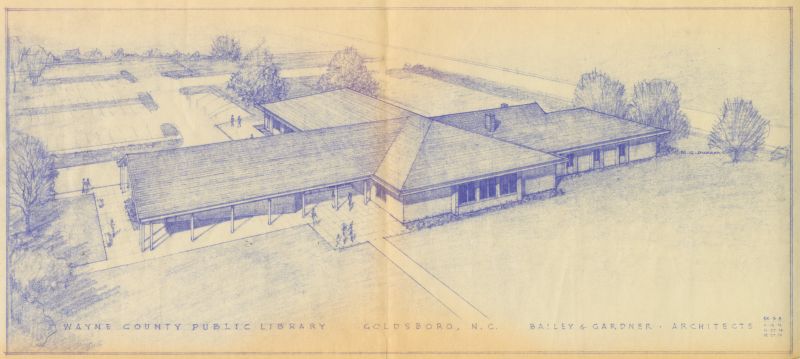
Wayne County Public Library, Goldsboro, Planning Sketch, Diazo Print, 1974
In 1976, after years of planning, our current Goldsboro Library location was completed. Fast forward to 2026, as we celebrate 50 years of serving the Goldsboro community from the building we all know and love! Our library staff have a full year of 70s themed programs planned, in honor of the decade our location was completed.
Don’t forget to grab a calendar when you stop by!
Although we are celebrating 50 years, the history of the Goldsboro library is much older! Going back to the beginning, we find ourselves at the turn of the 20th century. Founded in 1899, the Goldsboro Library was part of the Mental Culture Department of the Goldsboro Woman’s Club. Chaired by Sarah Weil, the library was located above Parrot’s Shoe Store on West Walnut Street. To become a patron of the library at the time, a donation was required. Luckily for us, less than 10 years later, a donation was no longer a perquisite for patronage as the library transitioned into a public institution in the early 1900s.
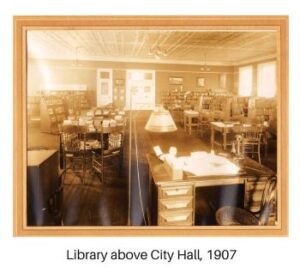 During its operation, the club members recognized the growing needs of the Goldsboro community. In 1908, the library goes public! In response to a petition made by the club members, the Board of Alderman became responsible for the library as a public institution, and it was then located in an upstairs area of City Hall. This would be the home of the library until 1929. From 1908 to 1929, the circulation, collections, and services of the library expanded, now including a North Carolina Collection and a reading room. In 1929, the home of the late Sarah and Solomon Weil was donated by their children for the use of the library.
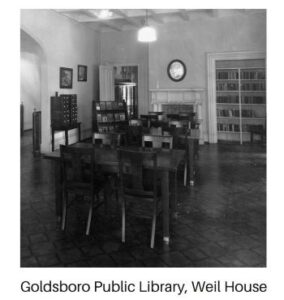 After assessments by the State’s Library Commission, the public library moved into its new home in March of 1930. This new location proved to aid in the growth of the library, despite its less optimal location as compared to its previous shared building in the business center of town. The library then had the space for two reading rooms, a children’s room, an office, and a rose garden. Amidst the library’s stay at the Weil house, it became a part of the county system. While the library continued serving a portion of the community under new management, the black population went without library services until 1942.
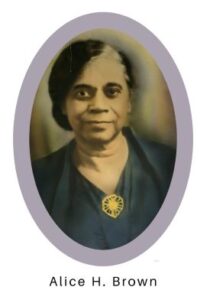 This was the year that the “Goldsboro Colored Center Library” was opened by the city to serve African American Goldsboro citizens. The library was open for a few hours several days a week and Lavenia Watson, the first black librarian, was hired. During Watson’s 23-year tenure, the library was moved to West Pine Street and renamed the Alice H. Brown Library in honor of the late educator. Seen to the right, Brown, was the supervisor of the “Negro Elementary Schools” in Goldsboro and a teacher at Dillard High School where she taught up until her passing.
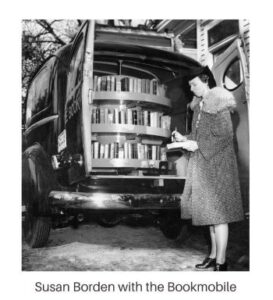 To further meet the needs of the county, Wayne County Public Library began a traveling library service called the Bookmobile. The first county librarian, Susan Borden, drove the bookmobile to extend library services to more areas of the county. The library continued to operate this way, and over time it became clear that the need for library materials and services in the county grew beyond the walls of the Weil House. Library branches were opened in Fremont, Pikeville, Seven Springs, and Mount Olive. Despite there being multiple branches of the library, the Goldsboro library was still in need of more space.
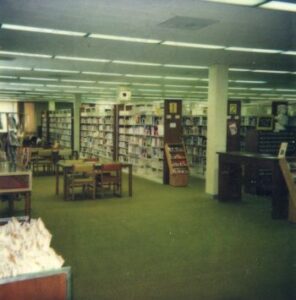
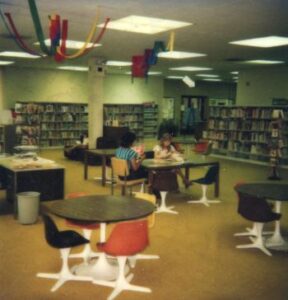
Considering this, a proposal was made for a new library to be built in Goldsboro. This proposal brought forth a new building funded by local government funds and donations. About 7 years later, in 1976, the building we have today was completed! Our library now has an auditorium, small meeting rooms, a children’s department, a reference department for adult services, and circulation department that loans books all over the state. The original floor plans for the library were expanded to accommodate our very own Local History Room, as mentioned in correspondence with the architects in 1974. The pictures below depict the library in 1986. Since then, more shelves and new technology have been added. At one point in time there was even a fish tank in the Children’s Department! The library has been a part of Wayne County’s history for over a century. If you want to learn more about the Goldsboro Location, come visit the Local History Room and check out the original blueprints, scrapbooks, and photographs!
Wayne County Public Library, Goldsboro, Planning Sketch, Diazo Print, 1974
In 1976, after years of planning, our current Goldsboro Library location was completed. Fast forward to 2026, as we celebrate 50 years of serving the Goldsboro community from the building we all know and love! Our library staff have a full year of 70s themed programs planned, in honor of the decade our location was completed.
Don’t forget to grab a calendar when you stop by!
Although we are celebrating 50 years, the history of the Goldsboro library is much older! Going back to the beginning, we find ourselves at the turn of the 20th century. Founded in 1899, the Goldsboro Library was part of the Mental Culture Department of the Goldsboro Woman’s Club. Chaired by Sarah Weil, the library was located above Parrot’s Shoe Store on West Walnut Street. To become a patron of the library at the time, a donation was required. Luckily for us, less than 10 years later, a donation was no longer a perquisite for patronage as the library transitioned into a public institution in the early 1900s.
During its operation, the club members recognized the growing needs of the Goldsboro community. In 1908, the library goes public! In response to a petition made by the club members, the Board of Alderman became responsible for the library as a public institution, and it was then located in an upstairs area of City Hall. This would be the home of the library until 1929. From 1908 to 1929, the circulation, collections, and services of the library expanded, now including a North Carolina Collection and a reading room. In 1929, the home of the late Sarah and Solomon Weil was donated by their children for the use of the library.
After assessments by the State’s Library Commission, the public library moved into its new home in March of 1930. This new location proved to aid in the growth of the library, despite its less optimal location as compared to its previous shared building in the business center of town. The library then had the space for two reading rooms, a children’s room, an office, and a rose garden. Amidst the library’s stay at the Weil house, it became a part of the county system. While the library continued serving a portion of the community under new management, the black population went without library services until 1942.
This was the year that the “Goldsboro Colored Center Library” was opened by the city to serve African American Goldsboro citizens. The library was open for a few hours several days a week and Lavenia Watson, the first black librarian, was hired. During Watson’s 23-year tenure, the library was moved to West Pine Street and renamed the Alice H. Brown Library in honor of the late educator. Seen to the right, Brown, was the supervisor of the “Negro Elementary Schools” in Goldsboro and a teacher at Dillard High School where she taught up until her passing.
To further meet the needs of the county, Wayne County Public Library began a traveling library service called the Bookmobile. The first county librarian, Susan Borden, drove the bookmobile to extend library services to more areas of the county. The library continued to operate this way, and over time it became clear that the need for library materials and services in the county grew beyond the walls of the Weil House. Library branches were opened in Fremont, Pikeville, Seven Springs, and Mount Olive. Despite there being multiple branches of the library, the Goldsboro library was still in need of more space.
Considering this, a proposal was made for a new library to be built in Goldsboro. This proposal brought forth a new building funded by local government funds and donations. About 7 years later, in 1976, the building we have today was completed! Our library now has an auditorium, small meeting rooms, a children’s department, a reference department for adult services, and circulation department that loans books all over the state. The original floor plans for the library were expanded to accommodate our very own Local History Room, as mentioned in correspondence with the architects in 1974. The pictures below depict the library in 1986. Since then, more shelves and new technology have been added. At one point in time there was even a fish tank in the Children’s Department! The library has been a part of Wayne County’s history for over a century. If you want to learn more about the Goldsboro Location, come visit the Local History Room and check out the original blueprints, scrapbooks, and photographs!
Wayne County Public Library, Goldsboro, Planning Sketch, Diazo Print, 1974
In 1976, after years of planning, our current Goldsboro Library location was completed. Fast forward to 2026, as we celebrate 50 years of serving the Goldsboro community from the building we all know and love! Our library staff have a full year of 70s themed programs planned, in honor of the decade our location was completed.
Don’t forget to grab a calendar when you stop by!
Although we are celebrating 50 years, the history of the Goldsboro library is much older! Going back to the beginning, we find ourselves at the turn of the 20th century. Founded in 1899, the Goldsboro Library was part of the Mental Culture Department of the Goldsboro Woman’s Club. Chaired by Sarah Weil, the library was located above Parrot’s Shoe Store on West Walnut Street. To become a patron of the library at the time, a donation was required. Luckily for us, less than 10 years later, a donation was no longer a perquisite for patronage as the library transitioned into a public institution in the early 1900s.
During its operation, the club members recognized the growing needs of the Goldsboro community. In 1908, the library goes public! In response to a petition made by the club members, the Board of Alderman became responsible for the library as a public institution, and it was then located in an upstairs area of City Hall. This would be the home of the library until 1929. From 1908 to 1929, the circulation, collections, and services of the library expanded, now including a North Carolina Collection and a reading room. In 1929, the home of the late Sarah and Solomon Weil was donated by their children for the use of the library.
After assessments by the State’s Library Commission, the public library moved into its new home in March of 1930. This new location proved to aid in the growth of the library, despite its less optimal location as compared to its previous shared building in the business center of town. The library then had the space for two reading rooms, a children’s room, an office, and a rose garden. Amidst the library’s stay at the Weil house, it became a part of the county system. While the library continued serving a portion of the community under new management, the black population went without library services until 1942.
This was the year that the “Goldsboro Colored Center Library” was opened by the city to serve African American Goldsboro citizens. The library was open for a few hours several days a week and Lavenia Watson, the first black librarian, was hired.
During Watson’s 23-year tenure, the library was moved to West Pine Street and renamed the Alice H. Brown Library in honor of the late educator. Seen here, Brown, was the supervisor of the “Negro Elementary Schools” in Goldsboro and a teacher at Dillard High School where she taught up until her passing.
To further meet the needs of the county, Wayne County Public Library began a traveling library service called the Bookmobile. The first county librarian, Susan Borden, drove the bookmobile to extend library services to more areas of the county. The library continued to operate this way, and over time it became clear that the need for library materials and services in the county grew beyond the walls of the Weil House. Library branches were opened in Fremont, Pikeville, Seven Springs, and Mount Olive. Despite there being multiple branches of the library, the Goldsboro library was still in need of more space.
Considering this, a proposal was made for a new library to be built in Goldsboro. This proposal brought forth a new building funded by local government funds and donations. About 7 years later, in 1976, the building we have today was completed! Our library now has an auditorium, small meeting rooms, a children’s department, a reference department for adult services, and circulation department that loans books all over the state. The original floor plans for the library were expanded to accommodate our very own Local History Room, as mentioned in correspondence with the architects in 1974. The pictures below depict the library in 1986. Since then, more shelves and new technology have been added. At one point in time there was even a fish tank in the Children’s Department! The library has been a part of Wayne County’s history for over a century. If you want to learn more about the Goldsboro Location, come visit the Local History Room and check out the original blueprints, scrapbooks, and photographs!
Wanna See Something Cool?
By Justin Pickett, Reference Librarian
Swing batter batter!!
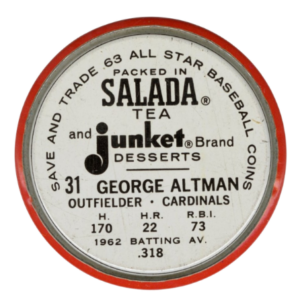
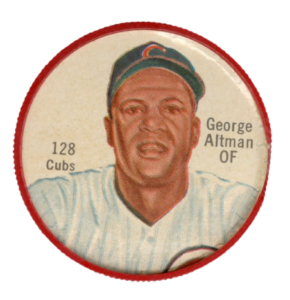
Baseball season is in full swing! America’s favorite pastime has everyone excited, and some of the most cherished baseball memorabilia are trading cards! There was a time when you could find baseball cards of your favorite player in Cracker Jack boxes, cigarette cartons, and chewing gum packs. Check out a sample of baseball collectibles we have in Local History. This trading card, to the right, features the legendary Goldsboro Native and Dillard High School Alumni, George Altman (1933-2025). Altman started as player for the Negro Leagues, which led him to the Chicago Cubs in the MLB! After the MLB, he continued his career in Japan with Nippon Professional Baseball until 1975.
Salada Tea baseball coins that you could collect from the package in the 1960s.

To the right, we have an example of a baseball trading card that you could collect from cigarette packages in the 1920s. In the late1880s these cards were included in packages to prevent the cigarettes from being crushed.
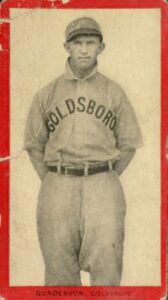
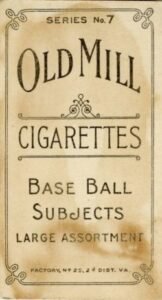
The card to the right features one of the players for the Goldsboro Giants in 1910, Oliver Gunderson. The backside of the card holds information for the trading series as well as an advertisement for Old Mill Cigarettes. This brand carried cards for various teams while being the most popular tobacco brand of the early 20th century!
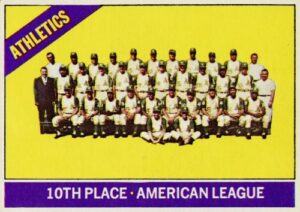
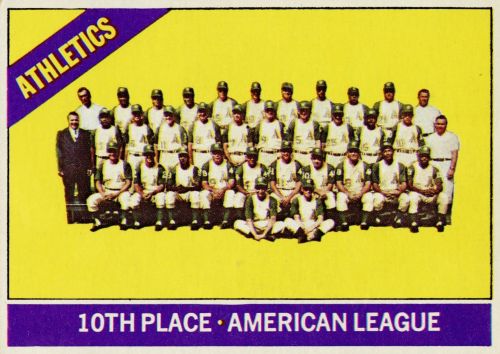
The trading card below features the Kansas City Athletics Team of 1965, commemorating their 10th place ranking in the American League.
To the right, we have an example of a baseball trading card that you could collect from cigarette packages in the 1920s. In the late1880s these cards were included in packages to prevent the cigarettes from being crushed.
The card to the right features one of the players for the Goldsboro Giants in 1910, Oliver Gunderson. The backside of the card holds information for the trading series as well as an advertisement for Old Mill Cigarettes. This brand carried cards for various teams while being the most popular tobacco brand of the early 20th century!
The trading card below features the Kansas City Athletics Team of 1965, commemorating their 10th place ranking in the American League.
To the right, we have an example of a baseball trading card that you could collect from cigarette packages in the 1920s. In the late1880s these cards were included in packages to prevent the cigarettes from being crushed.
The card to the right features one of the players for the Goldsboro Giants in 1910, Oliver Gunderson. The backside of the card holds information for the trading series as well as an advertisement for Old Mill Cigarettes. This brand carried cards for various teams while being the most popular tobacco brand of the early 20th century!
The trading card below features the Kansas City Athletics Team of 1965, commemorating their 10th place ranking in the American League.